How to Study Psychology in UK: 2026 Guide (UCAS + BPS)
Your decision to study psychology in UK as an international student is more than just an academic endeavour. It is a decision of a lifetime that makes you realise that the world is full of opportunities. Universities in the UK are known for three critical things:
- Globally recognised qualifications
- Good British Psychological Society (BPS) accreditation
- Practical learning environments that prepare students to succeed in the real world
Your ambition to become a clinical psychologist, researcher or even a counsellor can be easily achieved in the UK. That’s because here you get the resources, mentoring, and international exposure you need to succeed.
The following guide is aimed at students who aspire to gain insight into the functioning of the human mind and gain an internationally regarded psychology degree in the UK. By the time you finish reading this article, you will know how to study psychology in UK can define your career and open up a world of opportunities.
Why Choose to Study Psychology in the UK as an International Student?
These reasons suggest why to study psychology in the UK as an international student.
Global Reputation and Research Excellence
The UK has some of the best psychology institutions in the world. Oxford, Cambridge, University College London (UCL) and King’s College London (KCL) are the universities that are regularly among the top in psychology.
For example, in the Times Higher Education subject ranking, Cambridge ranks first in the UK and second in the world in psychology. UCL and KCL are in the top UK ranking, too.
These universities excel in state-of-the-art research in numerous specialisations: clinical, developmental, social and forensic psychology. Being an international student, you’ll have access to the best laboratories, research projects and professionals who are defining new frontiers in the psychological field.
BPS Accreditation and Professional Pathways
BPS accreditation is one of the greatest benefits of a UK psychology course. The British Psychological Society guarantees that accredited programmes are of high quality. Completion of an undergraduate BPS-accredited degree or conversion course qualifies you to be a member of the Graduate Basis for Chartered Membership (GBC) of the Society.
GBC provides an easier transition to professional postgraduate training. These include clinical psychology, health psychology and educational psychology. In addition, MSc programmes in psychology in the UK or conversion MSc programmes last about one year. This assists international students in becoming professionally ready sooner.
Career Outcomes and Versatility
Having studied psychology in the UK contributes to a broad career choice. You can become a clinical psychologist, a forensic psychologist, or even branch into creative fields like graphic design in the UK, where psychology principles are increasingly used in branding, UX, and visual communication. You can also explore a career as an occupational psychologist or an educational psychologist.
Alternatively, you may get to work in the NHS. Even offers at a research institution or in the private and community sectors may open for you.
Also, you will gain useful transferable skills, like:
- Data analysis
- Research
- Statistical interpretation
- Explanations of complex concepts
- Multicultural work
Below is a short table on the comparison of career outcomes:
| Role | Typical qualifications needed | BPS/Professional requirement |
| Clinical Psychologist | Professional doctorate (DClinPsych) after graduate + postgraduate training | Must have GBC + approved doctorate programme |
| Health Psychologist | MSc/postgraduate training in Health Psychology after BSc | Accredited degree/training + GBC necessary |
| Educational Psychologist | Master’s + professional training | MSc/postgraduate training in Health Psychology after a BSc |
| Counselling/Forensic/Occupational | Master’s/Doctoral level depending on route | BPS recognised/accredited pathway required |

Best UK Cities and Institutions to Study Psychology
The following details give an insight into the best psychology universities in the UK for international students. We have also highlighted cities and their strengths.
Top-Ranked Universities by Speciality
The Times Higher Education Subject Rankings 2025 have a number of institutions in the UK among the best in psychology in the world.
Cambridge, UCL, Oxford, and King’s College London always end up in the top rankings. King’s, for example, ranked 9th in the world in psychology in 2025. It was listed at 15 in the previous year. That’s a huge jump.
Other powerful competitors are the Universities of Manchester, Edinburgh, and Warwick.
The best way to narrow the search down is by using league tables or UK ranking tools. Choices include psychology league tables of the Complete University Guide. They help filter by student satisfaction, graduate prospects, entry standards and location.
City Highlights and Educational Strengths
- London: UCL, KCL (IoPPN) and numerous others. Students at IoPPN, the Institute of Psychiatry, Psychology and Neuroscience (KCL), have access to clinical placements through the South London and Maudsley NHS Foundation Trust, connecting theory directly to patient care.
- Edinburgh: Excellence in cognitive and developmental psychology, and a rich research base.
- Manchester: The centre of neuroscience, social psychology, and innovative research.
- Birmingham: Fair balance of applied and theoretical psychology strengths.
- Glasgow: Good programmes in health psychology, social psychology, and brain sciences.
Indicatively, the University of Bath caters to very good programmes in cognitive, health, social, and clinical psychology.
Here is a comparison table to summarise:
| University | City | Specialisation | Accreditation | Research strength |
| KCL (loPPN) | London | Clinical, neuroscience, psychopathology | Strong BPS connection | Clinical placements via Maudsley, rich patient access |
| UCL | London | Cognitive, developmental, social psychology | Accredited programmes | Broad international research collaborations |
| Oxford/Cambridge | Cambridge | Cognitive, developmental, and social psychology | Prestigious, rigorous | Deep foundational research, high citation impact |
| Bath | Bath | Health, clinical, cognitive, social | BPS-aligned courses | Applied research, placement integration |

Entry Requirements, Costs and Visa Considerations
Here is what the entry requirement looks like for UK psychology degree international students.
Academic and Language Requirements
Most universities want good academic performance and proficiency in English to be enrolled in a UK psychology degree.
The typical requirements of undergraduate candidates are A-levels with good grades. And for the master’s, applicants generally need a 2:1 honours degree in psychology or a related course.
In the case of English, most universities require IELTS 6.5-7.5 or a similar TOEFL iBT score. However, students from Bangladesh who prefer alternative destinations can explore study opportunities in Europe without IELTS to expand their options beyond the UK. Non-psychology students are also able to take conversion MSc programmes, which are accredited by the British Psychological Society (BPS).
Tuition Fees and Cost of Living
International psychology students will be charged between £20,000 and £35,000 in tuition fees annually. The cost of living is different in each city and generally ranges between £1,000 and £1,500 a month plus accommodation and other necessities.
Budgeting is one of the things that can guarantee a comfortable study experience.
Visa: Student Route and Graduate Work Opportunities
The UK Student Route Visa (previously Tier 4) allows students to study full-time and part-time. Those planning to bring their partner or dependents can explore the UK spouse visa application process for faster and smoother settlement options.
The Graduate Route Visa will permit up to two years of employment in the UK. And the high-potential individual visa can be applicable to the graduates of the world-leading universities.
Scholarships, Funding and Financial Support
Here is a quick detail on how you can fund your education in the UK.
Scholarships for International Psychology Students
Students who want to pursue studies in psychology in the UK have access to various scholarships that are meant to relieve them of financial burden.
Some prestigious options are –
- The Chevening Scholarship (fully funded master’s)
- The Commonwealth Shared Scholarship
- University-based schemes, such as the University of Glasgow’s £10,000 International Leadership Scholarship.
A number of universities in the UK also offer merit-based awards or country-based bursaries. That’s why the students are advised to look within the university site or connect with BHE UNI to receive specific guidance.
Cost Mitigation Strategies
Part-time employment is also an option for students to manage costs under the UK Student Route Visa. Or, they can seek international student loans.
The Graduate Route also contributes to this. It permits 2 years of post-study employment. That is how it facilitates early career development.
| Scholarship | Value | Institution/Source | Deadline |
| Chevening Scholarship | Full tuition + Stipend | UK Government | Nov yearly |
| Commonwealth Shared | Full funding | FCDO/UK Universities | Dec-Jan |
| Glasgow Leadership | £10,000 | University of Glasgow | Varies by course |
Student Experience and Support for International Learners
As a student, of course, there are challenges that you might face after being enrolled. This section elaborates on the same and helps you understand what you can do to tackle them.
Integration and Campus Life
The study of psychology in the UK implies being a part of a vibrant, multicultural academia. In cities such as London, Manchester and Edinburgh, there are universities that accommodate students from over 150 countries. This, in turn, results in an atmosphere of diversity, inclusion and common learning.
The cultural events, student societies and mentorship programmes that the international learners enjoy also ensure that they interact outside the classroom. Not only does this global environment contribute to personal development, but also to the development of essential skills in the field of psychology, empathy, communication and cultural understanding.
Challenges and University Solutions
Although international students tend to adapt successfully, not all of them avoid integration problems. In an HEPI report (2022) about Chinese students, e.g., ethnic clustering and high use of home-country social apps were identified as a problem, where the use of home-country social apps restricted local interaction.
Some of the measures that UK universities have taken to address cross-cultural friendships and confidence in a new environment include:
- Buddy systems
- Peer-mentoring programmes
- Cross-cultural orientation programmes
The best way for Bangladeshi students to utilise these resources is by joining the international societies and participating in wellbeing workshops. They can just keep in touch with the university support services, too.
Proactive interaction will enable all students to feel at home as they seek to complete a globally renowned UK psychology degree as an international student.
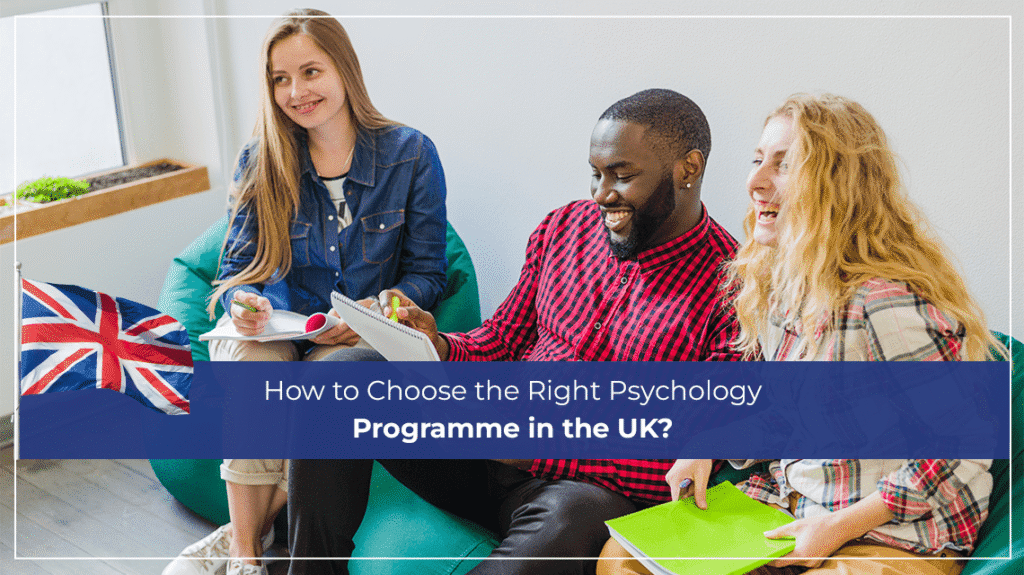
How to Choose the Right Psychology Programme in the UK?
Here are some tips that might come in handy.
Choosing Between Master’s, Undergraduate and Conversion Courses
The choice of the appropriate psychology pathway is tied to your background and career objectives. A BSc in psychology will give you the requisite research, theory and practical skills required in case you are starting your academic life. Graduates in psychology or other related fields can pursue a Master of Psychology (MSc), which enables more specialisation in such areas as clinical, health, or forensic psychology.
Provided that your initial degree is not in psychology, a conversion MSc presents a useful entry point into psychology. Such programmes are usually BPS-accredited and include the core material needed to complete further professional training.
Individuals who want to be chartered psychologists or researchers can subsequently take a PhD or Doctorate in Clinical Psychology (DClinPsych), depending on the specialisation of choice.
To be successful, it is important to match your type of course with your future.
Filtering by Accreditation and Practical Opportunities
In comparing programmes, do not just consider ranking tables. A selected course ought to provide BPS accreditation, practical placements, and a chance to conduct real-life research. Prior to application, consider the following checklist:
- BPS accreditation status
- The time and length of the course
- The emphasis is on research or applied learning
- Access to clinical or work placements
- Cost of living and city life
Close consideration is necessary so that your UK psychology degree as an international student can cater to your professional goals and personal health.

Frequently Asked Questions
What are the top-ranking UK universities for psychology for international students?
Top-ranking universities are:
– Oxford
– Cambridge
– UCL
– King’s College London
– Manchester
– Edinburgh
– Warwick
These leading institutions provide excellent research and BPS-approved programmes. They have diverse international student communities.
What is the cost of studying a psychology master’s in the UK for international students?
The tuition fee varies between £20,000 and £35,000 annually. The living expenses amount to £1,000- £1,500 per month. This cost varies based on the city and living standards.
What entry requirements do I need for a psychology degree in the UK?
Undergraduates must have high academic qualifications. Those who want to study a master’s degree generally must have a 2:1 honours degree in psychology or a related subject. Plus, IELTS 6.5-7.5 or other English language skills are needed.
Are UK psychology courses BPS-accredited? What does that matter?
The BPS accreditation conditions the professional standards of the courses. As a result, the graduates will be able to take further steps to chartered membership. This is a prerequisite for a career in clinical, health and educational psychology.
Can I work in the UK after studying psychology?
Yes. The Graduate Route Visa can be extended to two years of employment after graduation. This helps in career progression in research, NHS jobs, or in the practice of private psychology.
What scholarships are available for international psychology students in the UK?
Notable scholarships for international students include:
– Chevening
– Commonwealth Scholarships
– Glasgow Leadership Award (£10,000)
– University merit-based bursaries
– International student loans
How can international students integrate better culturally at UK universities?
Take part in mentorship programmes and cultural events. Or become members of student societies and buddy schemes. Forming networks and being an active member will overcome the isolation. It will ensure cross-cultural learning.
Conclusion
In the UK, there are world-class courses accredited by the BPS and a wide range of career opportunities in the disciplines of clinical and counselling psychology. International students are able to balance expenses and also excel in school with scholarships, part-time jobs, and friendly university circles.
Early planning guarantees an optimal selection of courses and funding alternatives. Support from BHE UNI is at hand to help students through each step of the personalised programme comparison to application support. Begin now and make your dream a reality in the field of psychology across the world.