
Difference Between Public and Private Universities
When students ask about the difference between public and private universities, they usually want one clear answer: which option gives better value for my goals and budget? The real decision comes down to four factors that matter everywhere: net cost, program fit, student support, and outcomes after graduation.
A public university is typically government-funded and designed to serve a broad population. A private university is independently governed and funded through tuition, donations, and endowments. That difference affects pricing, admissions priorities, class sizes, and sometimes student experience, but not always in the ways people expect.
Important scope note: definitions and policies vary by country and, in some cases, by state or province. Tuition rules, residency benefits, and accreditation requirements differ widely. Always verify details on official university websites and education regulator pages before deciding.
This guide walks you through how public and private universities differ, how to compare real costs, and how to make a confident, evidence-based choice.
Public vs private university: what’s the difference (ownership, funding, and control)?
The core distinction between public and private universities lies in their ownership, funding, and governance, but not in the quality of education they provide.
Ownership and control
Public universities are created by government entities, such as education ministries or state systems. In contrast, private universities in the UK operate on their own, managed by their own governing boards.
Funding sources
Public universities receive a portion of their operating budget from government funding, alongside tuition fees, grants, and research income. Private universities mainly depend on tuition, donations, research funding, and earnings from their endowment (pool of invested funds that is used to support university operations and provide scholarships).
Accountability and mission
Public institutions are answerable to taxpayers and usually have an explicit mission to expand access for local or resident students. Private universities set their own mission, which can be centred on research, religious affiliation, teaching focus or specific professional outcomes, as you’ll see across private universities in Australia and Australia’s national register of higher education providers.
Tuition setting
Public colleges and universities usually charge less to resident students and more to non-resident or international students, which matters if you are applying to American universities from the UK. Privately operated universities often impose a single tuition fee, irrespective of residential status, but can subsidise this with institutional funds.
Scale and structure
Public universities often enrol larger student populations and offer a wider range of programs. Private universities are frequently smaller, though some large private institutions exist.
When this distinction does not apply
Some institutions use mixed funding models or operate as semi-public entities. In certain countries, “public” and “private” labels reflect funding history rather than current governance. Always confirm the legal status and accreditation of the institution, and understand key documentation, such as what a CAS letter is.
Public vs Private University Comparison Table
| Factor | Public University | Private University |
| Ownership | Government | Independent |
| Funding | Government + tuition | Tuition + endowment |
| Governance | Public boards | Board of trustees |
| Mission | Public access | Institution-defined |
| Tuition model | Resident vs non-resident | Single published rate |
| Typical size | Large | Small to medium |
Private nonprofit vs private for-profit
Private nonprofit universities reinvest surplus funds into education. For-profit institutions operate as businesses. This distinction matters for accreditation, program recognition, and student protections. Always verify accreditation and licensure eligibility with bodies such as the Council for Higher Education Accreditation or your country’s regulator.

Public vs private university cost: tuition, fees, and net price (what you really pay)
Choosing between public and private universities based on “tuition” alone often leads to the wrong decision. What matters is net price, meaning your total cost of attendance minus grants and scholarships (loans don’t reduce net price).
Sticker Price vs Net Price
The sticker price is the published tuition and fees. Net price is what you actually pay after gift aid. Private universities often have higher tuition, but they may offer institutional grants funded by donations or an endowment. Public universities may show lower tuition for residents because government funding subsidises the price, while non-resident and international tuition can be much higher.
Cost of Attendance (COA): The Full Bill
Your COA typically includes:
- Tuition and mandatory fees
- Housing and meals
- Books and supplies
- Transportation and personal expenses
- Health insurance (sometimes required)
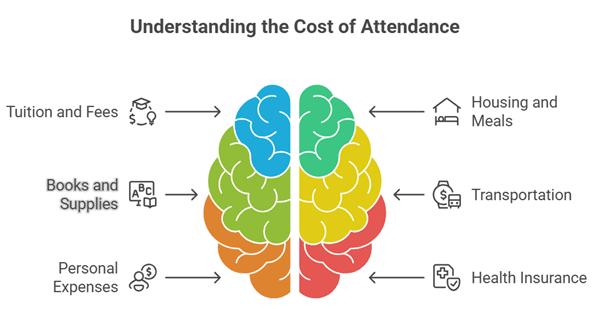
Many universities publish COA and net price tools. In the U.S., many institutions participating in federal student aid must provide a net price calculator and define net price as COA minus grant/scholarship aid.
Quick Cost Breakdown Table (Copy-Ready)
| Cost Item | Public (common pattern) | Private (common pattern) |
| Tuition model | Resident vs non-resident | Usually one rate |
| Grants/scholarships | Varies by state/system | Often larger institutional aid |
| Fees | Program + campus fees | Program + campus fees |
| Housing | Can be cheaper off-campus | Sometimes higher campus costs |
Scenarios That Change the Answer
- Resident vs non-resident: Public can be a bargain for residents but not for non-residents.
- International student: Public vs private depends heavily on scholarships and published international rates (country-specific). For example, when comparing options like private universities in Canada, Statistics Canada’s tuition fee data shows international undergraduate tuition averages are materially higher than domestic in many cases.
- Commuter vs on-campus: Living at home can flip the “cheaper” choice instantly.
Net price worksheet (copy/paste)
Net Price (Annual) = COA − (Grants + Scholarships)
Then estimate: 4-year total = Net Price × expected years to graduate
Total Cost of Attendance
Tuition + fees + housing + meals + books + insurance + personal costs
Minus Grants and Scholarships
Merit aid + need-based aid + external scholarships
Equals Net Price (Annual)
Multiply by expected years to graduate
Renewal checks
GPA, credit load, major-specific rules, time limits, residency eligibility.
Hidden costs that change the decision
When planning for college, explore more on your program’s expenses, such as lab charges, required meal plans, and health insurance costs. Even orientation fees and annual tuition increases can shift affordability. Instead of relying on polished brochures, review the actual fee breakdowns and learn how your financial aid is renewed each year. That’s where you’ll find the true costs.
Use official net price calculators and government aid guidance, such as those provided by the U.S. Department of Education or equivalent authorities in your country, to model realistic four-year costs, especially if you are studying in the UK as an international student.

Public vs private university admissions: which is harder to get into?
Students often ask whether it is easier to get into a public university or a private university. The honest answer is that admissions difficulty depends more on the institution and the program than on whether it is public or private. A structured comparison helps clarify where the real differences lie.
| Admission Factor | Public Universities | Private Universities |
| Residency/local preference | Often given priority for state residents | No residency quotas |
| Capacity/quotas (government-set) | May have enrolment caps or quotas | Set internally by the institution |
| Admission review style | Often emphasis on academic thresholds | Often holistic review |
| Program prerequisites | Strict prerequisite requirements | Prerequisites + holistic considerations |
| Transfer/articulation pathways | Widely documented statewide or system agreements | Varies by institution, less standardised |
Admissions drivers
Public universities may prioritise resident students and operate under capacity limits set by government policy. Competitive programs can be highly selective, especially in health, engineering, or flagship campuses. Private universities often use holistic review, considering academics, extracurriculars, essays and recommendation letters.
Here are some factors you need to consider-
Role of Residency and Local Preference
Public universities frequently prioritise applicants from their own state, province, or region. This residency preference exists because these institutions are funded partly by local taxpayers. As a result, admission can be relatively accessible for resident students but significantly more competitive for non-residents and international applicants. Private universities do not apply residency quotas, so all applicants usually compete within the same pool.
Capacity Limits and Government Policies
Public universities typically have to adhere to enrolment caps established by government or system-level authorities. When the demand for spots outstrips capacity, competition can become quite intense, particularly at flagship campuses. Private universities typically have greater flexibility in setting their class size. However, they may still impose limits on admissions based on faculty availability or accreditation needs.
Selectivity by Institution and Program
The level of selectivity differs much more by program tier than public or private status. Public universities and highly-ranked programs like medicine, engineering or computer science can be very selective. Meanwhile, private universities maintain higher acceptance rates but with more rigorous requirements for specific majors.
Holistic Review vs Academic Cutoffs
Holistic admissions are mainly common in the private universities, which involve essays, recommendations, curriculum activities, along with personal backgrounds and grades. In public universities, academic thresholds are likely to play a more significant role, however, this varies depending on the institutions and the country. No approach is easy, each favours different applicant strengths.
Transfer Pathways and Alternative Entry Routes
Public university systems are often well articulated and have transfer agreements that allow students to transfer from colleges to universities after meeting some criteria. These properly structured pathways can ultimately render public universities more accessible. Private universities also take transfer students, although the policies are less standardised and vary widely.
Year-to-Year Policy Changes
Admissions standards are not static. Acceptance rates, testing requirements and residency rules may vary every year depending on demand, funding and policy changes. Applicants are advised to use official admissions pages and current data instead of old statistics.
Both government and private universities may be either easy or difficult to join. Admission challenges are determined by the residential status, program demand, institutional mission, and available capacity, and they can vary further by programme type, such as taught vs research master’s degrees. The most accurate comparison comes from evaluating specific universities and programs, not labels alone.

Class size, teaching style, and resources: what changes day-to-day?
Day-to-day academic experience varies widely across institutions, but several patterns influence student life.
Class size and instruction
Public universities usually offer large introductory lectures that are supported by discussion sections or labs. Private universities tend to put more emphasis on small classes, particularly in the early years.
Faculty access and advising
Student–faculty ratios, advising loads, and office hour availability differ by department. Some public universities offer extensive tutoring centres and peer-led support, while some private universities provide more individualised advising.
Learning resources
Research centres, labs, studios and libraries may be more extensive at large public research universities. Private universities may offer easier access to facilities with fewer students competing for resources.
How to verify class size
Check course schedules, the number of sections, labs or seminars required, and advising ratios in the course catalogue. Don’t depend on promotional averages.
Research, labs and internships
Access depends on eligibility rules. Ask departments about GPA thresholds, year-of-study limits, and application processes. Review official departmental pages and published policies to confirm opportunities.
Outcomes and value: graduation rates, jobs, and ROI (how to compare fairly)
Graduation and Retention Rates
Retention rate reflects the percentage of students who continue their studies after their first year. Graduation rate shows the percentage of students who finish their degree within a standard time frame. Such indicators reflect the level of academic support, the quality of advice, and institution fit.
Public universities have lower graduation rates due to the large numbers of students they cater to such as part-time, transfer, and working students. The rates in private universities are usually higher because of smaller groups and more selective admissions. However, raw percentages can be misleading as student demographics and enrolment patterns vary.
Time-to-Degree and Completion Efficiency
Time-to-degree has an impact on cost and opportunity. Delay increases overall cost through additional tuition, living costs and lost earning potential. A few public universities excel at structured degree pathways and transfer alignment, while some private universities emphasise close advising to ensure that students are on track. Always verify whether published graduation rates include transfers or only first-time students.
Employment and Placement Outcomes
Placement rates are often published by universities, but definitions vary. Some involve full-time employment, part-time employment, self-employment or further study. Others are based on voluntary surveys with small response rates. Program-level outcomes matter more than institutional averages.
Earnings and Debt at Graduation
Median earnings by field of study and average student debt give an idea of ROI, and sources like the U.S. Department of Education’s College Scorecard can help you compare outcomes using consistent definitions. These figures should be compared by major and region, not across the entire institution. Public universities might show lower average debt because of lower tuition for residents. Private universities might demonstrate a higher debt but more robust earnings in certain disciplines.
Outcome metrics table
| Metric | What it means | How it can mislead |
| Graduation rate | Completion success | Excludes transfers |
| Placement rate | Job or study outcomes | Definitions vary |
| Median earnings | ROI proxy | Regional bias |
| Debt at graduation | Financial risk | Averages hide spread |
Red flags
Data is less reliable when definitions are unclear, sample sizes are small or only selected results are shared. Whenever possible, use government data and university reports that clearly explain how the information was collected.
How to Choose Between Public and Private University: Decision Matrix & Next Steps
A structured process removes emotion from the decision.
Step-by-step workflow
Shortlist programs that fit your academic goals. Verify accreditation and licensure eligibility. Calculate net price using official calculators. Evaluate support resources and documented outcomes. Decide based on evidence, not reputation.
Decision matrix template (weighted scoring)
| Criteria | Weight | Public | Private |
| Net cost | High | ||
| Program fit | High | ||
| Support resources | Medium | ||
| Outcomes evidence | Medium | ||
| Location/logistics | Low | ||
| Risk flags | High |
Aid offer comparison
Compare total grants, renewal rules, loan terms, and four-year cost projections. Save screenshots or PDFs of official offers for reference.
Common mistakes to avoid
Comparing sticker prices, ignoring scholarship renewal rules, choosing by ranking alone, and skipping program-level verification are the most frequent errors.
Next actions should be practical: run net price calculations, confirm accreditation, and schedule a department or admissions call with specific questions.

Frequently Asked Questions
Is a private university better than a public university?
No university type is inherently better. Outcomes depend on program quality, net cost, student support, and graduation results. You need to compare specific programs rather than judging by public or private labels.
Are public universities always cheaper than private universities?
Not always. Public universities may cost less for residents, but private universities often offer substantial scholarships. This can bring down the net price below public options, especially for non-resident students.
Which is easier to get into public or private university?
You need to know that neither is universally easier. Admission difficulty depends on residency status, program demand, capacity limits and institutional selectivity rather than whether the university is public or private.
Do employers care if a degree is from a public or private university?
Most employers prioritise accredited degrees and relevant skills. They also value internships and experience. Program reputation and graduate performance usually matter more than whether the institution is public or private.
Do private universities give more scholarships or financial aid?
Many private universities offer larger institutional grants, but eligibility and renewal rules vary. In contrast, public universities may offer fewer institutional scholarships but provide lower tuition for eligible resident students.
What’s the difference between a private university and a private college?
Private universities usually offer undergraduate and postgraduate degrees with a broader research scope. On the other hand, private colleges often focus on undergraduate education with fewer programs and limited research activity.
Can international students get resident tuition at public universities?
You should note that this is rare. Residency rules are strict and jurisdiction-specific. International students usually pay non-resident tuition unless they meet clearly defined legal residency criteria set by the university.
Conclusion
The difference between private and public university is not about prestige or labels. It is about balancing cost, academic fit, and long-term outcomes.
Public universities often provide strong value for local students and offer wide program choices. Private universities may offer small classes, targeted support and generous financial aid.
Because policies differ by country and institution, no comparison applies to everyone. Students should look beyond rankings and published tuition. Focus instead on net cost, program quality, student support, and verified outcomes.
Before deciding, calculate your real expenses, confirm accreditation, review scholarship rules, and speak directly with academic departments. A careful, evidence-based approach will help you choose a university that best matches your goals, finances and future plans.